Problem
Każdy wielki kryzys naszych czasów ma jedną wspólną przyczynę: struktury zarządzania, które nie zostały zbudowane dla świata, w którym dziś żyjemy. Demokracja, kapitalizm i socjalizm zostały zaprojektowane w celu rozwiązania konkretnych problemów w konkretnych epokach. Żaden z nich nie przewidział sztucznej inteligencji, masowej automatyzacji ani szybkości, z jaką władza może się koncentrować w XXI wieku.
To nie jest błąd wartości. Wartości leżące u podstaw demokratycznego zarządzania (równość, odpowiedzialność, reprezentacja) są nadal słuszne. Co zawiodło, to architektura. Mechanizmy, za pomocą których te wartości są wdrażane, zostały zaprojektowane dla wolniejszego świata: świata pracy przemysłowej, granic narodowych i wyłącznie ludzkich aktorów.
“We live in capitalism. Its power seems inescapable. So did the divine right of kings.”
Przed erą AI: luka globalizacji
Presja na systemy zarządzania nie zaczęła się od sztucznej inteligencji. Zaczęła się dziesięciolecia wcześniej, gdy globalizacja zaczęła przenosić łańcuchy dostaw, kapitał i informacje przez granice szybciej, niż instytucje narodowe były do tego zdolne. Struktura podatkowa zbudowana dla robotników fabrycznych w jednym kraju nie może regulować przedsiębiorstwa, które księguje zyski w Irlandii, prowadzi serwery w Wirginii, zatrudnia wykonawców w Manili i sprzedaje klientom w Brazylii. Ramy BEPS OECD, wielonarodowa próba naprawienia arbitrażu podatkowego korporacji, w ciągu dwóch lat negocjacji wypracowały piętnaście punktów działania i od dekady tkwią w sporach o ich wdrożenie. To opóźnienie nie jest polityczną nieudolnością. Jest strukturalną konsekwencją budowania zarządzania dla świata, który już nie istnieje. Umowa społeczna (pracuj tutaj, płać podatki tutaj, otrzymuj usługi tutaj) zakładała, że produkcja, konsumpcja i miejsce zamieszkania odbywają się w tym samym miejscu. Ta założenie legło w gruzach w ciągu mniej więcej trzydziestu lat. Instytucje na nim zbudowane nie nadążyły.
Reakcje polityczne (nacjonalizm, demokratyczny regres, ruchy antyimigracyjne) nie są irracjonalne. Są tym, co dzieje się, gdy ludzie słusznie wyczuwają, że decyzje dotyczące ich życia są podejmowane poza jakimikolwiek ramami, na które mają wpływ, i sięgają po najbliższy dostępny dźwignię: narodową urnę wyborczą. Pułapka strukturalna polega na tym, że krajowe urny wyborcze nie mogą rozwiązać problemów międzynarodowych.
Sztuczna inteligencja nie tworzy tu nowego problemu. Przyspiesza istniejący o rząd wielkości i usuwa pozostały czas na stopniową adaptację. Każde strukturalne niepowodzenie, które globalizacja ujawniła w krajowym zarządzaniu (niedopasowanie jurysdykcji, opóźnienie regulacyjne, luki w rozliczalności) AI ujawnia w zarządzaniu międzynarodowym, z prędkością maszyn. Pytanie nie brzmi, jak konkretnie zarządzać AI. Brzmi ono: dlaczego architektura zarządzania zdolna do działania z prędkością i skalą problemów, z którymi już się borykamy, jeszcze nie istnieje.
The Speed Mismatch problem velocity vs. governance velocity
Luka wartości człowieka: zarządzanie, które sortuje ludzi według paszportu
Najbardziej bezpośredni wyraz niepowodzenia zarządzania nie jest abstrakcyjny. Jest widoczny w tym, które życia otrzymują odpowiedzi instytucjonalne. Ukraiński uchodźca w 2022 roku otrzymał prawa do awaryjnego przesiedlenia w UE w ciągu dni. Afgański uchodźca próbujący tego samego przesiedlenia otrzymał średnio wieloletni proces biurokratyczny bez gwarantowanego wyniku. Syryjski uchodźca próbujący wjechać do tej samej UE w tym samym okresie był systematycznie blokowany lub zatrzymywany. Trzy kryzysy były jednoczesne. Odpowiedzi zarządzania były strukturalnie różne. Zmienną była geografia pochodzenia.
Ramy zarządzania, które głoszą równą godność ludzką, jednocześnie strukturalnie sortując dostęp do bezpieczeństwa, usług i statusu prawnego według pochodzenia narodowego, nie rozwiązały tego napięcia. Zakodowały je. Wartość ludzkiego życia, mierzona czasem odpowiedzi instytucjonalnej i dostępem prawnym, jest określana przez paszport, który ktoś posiada. To jest wybór projektowy systemu zarządzania, nie nieuchronność.
Sześć kryzysów, jedna korzenia
Democracy Under Pressure
Electoral cycles run on years. Disinformation, financial contagion, and AI deployment run on days. The accountability gap between those two speeds is not incidental it is the failure mode.
Countries containing 70% of the world's population experienced democratic backsliding over the past decade.
Power Concentrates
Power concentrates wherever accountability is absent in corporate monopolies, state bureaucracies, and platform algorithms alike. Capital moves faster than law. State surveillance moves faster still. The shared structural failure: no constitutional limit that applies equally to all of them.
The top 1% holds more wealth than the bottom 50% combined.
Disinformation at Scale
Opinions are now industrially manufactured. The threat is not individual lies it is coordinated uncertainty that paralyzes deliberation and makes collective decision-making impossible.
False news spreads 6× faster than accurate reporting on social media.
The Social Contract Breaks
Work was never just an economic mechanism it was the primary source of identity, social belonging, and meaning for most people. Every welfare system, pension scheme, and social insurance program was built on the assumption that most adults would work, most of the time. Automation removes that assumption.
Up to 85 million jobs displaced by automation between 2020–2025 (WEF estimate).
Cultural Collision Without Structure
As migration increases and digital communication erases distance, different legal traditions, value systems, and governance philosophies are being asked to coexist without any shared framework for how to do so. The result is friction without resolution mechanisms, and communities without representation.
281 million international migrants globally in 2020 more than triple the 1970 figure.
UN International Migration Report, 2020
Read: Identity & Citizenship →AI Without Governance
Artificial intelligence is the first technology that can make decisions, allocate resources, and influence human behavior at scale without any human directly in the loop. Who governs AI governs everything AI touches. As of 2025, the honest answer is: nobody with democratic legitimacy.
0 binding international AI governance treaties as of 2025.
Crisis Severity Index
V-Dem / WEF / OECD composite hover for sources
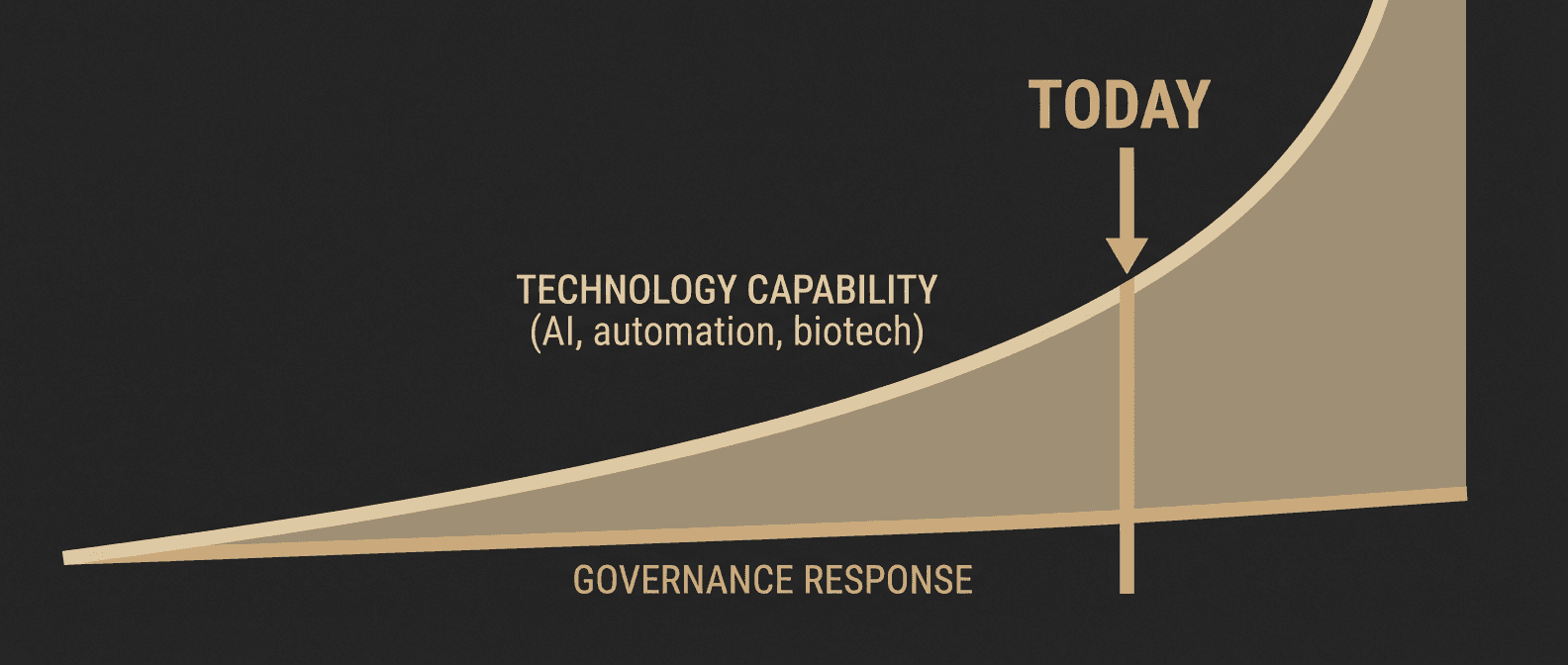
Luka prędkości zarządzania: instytucje zbudowane na dekady stoją wobec zagrożeń, które rozwijają się w ciągu godzin. Niedopasowanie jest strukturalne, nie przypadkowe.
Głębsze spojrzenie
Dlaczego demokracja zawodzi teraz
Instytucje demokratyczne zostały zaprojektowane do agregowania preferencji poprzez celowo powolne procesy: debatę publiczną, zgromadzenia reprezentatywne, system kontroli i równowagi. Ta powolność była cechą, nie błędem. Zapobiegała pochopnym decyzjom i wymuszała kompromis. Ale zakłada, że środowisko informacyjne jest w przybliżeniu uczciwe, że deliberacja jest możliwa i że prędkość zagrożeń jest ludzka.
Żadne z tych założeń nie obowiązuje dziś. Dezinformacja porusza się szybciej niż weryfikacja faktów. Polaryzacja jest przemysłowo produkowana. Zagrożenia egzystencjalne mogą materializować się w ciągu godzin: pandemia, wyścig zbrojeń AI, krach rynkowy wywołany przez algorytmy. Instytucje zbudowane na miesiące mają odpowiadać w minutach.
Zerwana umowa społeczna
Umowa społeczna ery przemysłowej była mniej więcej taka: pracujesz, zarabiasz na godność, przeżywasz. Praca była nie tylko mechanizmem ekonomicznym. Była głównym źródłem tożsamości, przynależności społecznej i sensu dla większości ludzi. Systemy opieki społecznej, systemy emerytalne, ubezpieczenia społeczne: wszystko to zostało zbudowane na założeniu, że większość dorosłych będzie pracować przez większość czasu.
Automatyzacja nie tylko zastępuje miejsca pracy. Rozkłada fundament, na którym zbudowany jest każdy system opieki społecznej. Żaden istniejący system nie ma strukturalnej odpowiedzi na to, co się dzieje, gdy większość produktywnych zadań może być wykonana taniej przez maszyny. To nie jest odległy problem przyszłości. To problem, który już generuje niestabilność polityczną w każdym uprzemysłowionym kraju.
Podłoga automatyzacji: kiedy produkcja przestaje mieć sens?
Globalny Raport Płacowy MOP 2022/23 udokumentował coś wartego uwagi: realne płace spadły w gospodarkach rozwiniętych po raz pierwszy od dziesięcioleci, podczas gdy produktywność rosła. Nadwyżka gdzieś poszła. Poszła do kapitału. To nie jest twierdzenie polityczne; to to, co pokazują liczby, gdy zestawimy je obok siebie.
Modelowania OECD wskazują, że 14% obecnych miejsc pracy jest narażonych na "wysokie ryzyko" pełnej automatyzacji, a kolejne 32% na ryzyko znaczącego wypierania zadań przez technologie, które już istnieją. Nie przyszłe. Standardowa odpowiedź brzmi: pojawią się nowe miejsca pracy, jak zawsze. Ta odpowiedź działała podczas automatyzacji przemysłowej, ponieważ maszyny zastępowały pracę fizyczną. Praca poznawcza była bezpieczna. To, co modele klasy GPT-4 zrobiły w 2023 roku, to ujawnienie tego założenia jako historycznie warunkowego. GPT-4 osiągnął 90. percentyl na egzaminie adwokackim Uniform Bar Exam. To nie jest automatyzacja fizyczna. To coś innego.
Trudniejsze pytanie nie dotyczy tego, czy miejsca pracy znikają. Trudniejsze pytanie jest takie, którego ekonomiści zazwyczaj unikają: co się dzieje, gdy maszyny produkują for machines? Fabryka FANUC w Oshino w Japonii działa w trybie lights-out od 2001 roku. Żadnych ludzi na hali. Maszyny budują maszyny. Rynki akcji w USA działają głównie na wolumenie algorytmicznym: handel maszyna-maszyna, żaden człowiek w pętli, implikacje dla PKB realne. Jeśli pójdziemy tą ścieżką do końca, otrzymamy system, który jest technicznie maksymalnie efektywny i nie wytwarza żadnego dobrobytu ludzkiego. PKB mógłby rosnąć, podczas gdy jakość życia każdego człowieka się pogarsza. Wskaźnik i rzeczywistość w pełni by się rozsprzęgły.
To nie jest zawodność rynku w konwencjonalnym sensie. Rynki reagują na popyt. Jeśli konsumenci nie mogą zarabiać, bo ich praca jest bezwartościowa dla systemu produkcji, nie ma konsumenta, na którego można reagować. System staje się samo-odnoszący: maszyny optymalizują dla wyników zasilających inne maszyny. Efektywność staje się jedynym wskaźnikiem, ponieważ jest jedynym, który przeżywa, gdy usunie się człowieka.
To, co pozostaje (i to nie jest argument pocieszający) jest jedyną rzeczą, której maszyny z definicji nie mogą mieć: celu. Maszyny są środkami. Optymalizują ku celom, które im wyznaczono. Nie mogą wyznaczać celów. Nie mogą zdecydować, że określony wynik wart jest realizacji ani że inny rodzaj społeczeństwa jest pożądany. Kreatywność, w filozoficznie poważnym sensie, to nie generowanie wyników. To wybór, które wyniki warte są generowania. Ten wybór wymaga kogoś, kto ma stawkę w odpowiedzi.
Odpowiedź Equiplurismu jest strukturalna, nie inspiracyjna. Jeśli ramy zarządzania nie zakodują instytucjonalnie wskaźników nie-efektywności (uczestnictwo ludzkie, wkład twórczy, różnorodność epistemiczna), to domyślna trajektoria to system, który je optymalizuje. Nie złośliwie. Tylko dlatego, że efektywność była jedynym kryterium, które ktoś pomyślał zapisać. Jak tożsamość, kultura i przynależność wchodzą w to, co liczy się jako wskaźnik nie-efektywności, jest bezpośrednio omawiane na stronie Tożsamości i Obywatelstwa.
Otwarte pytanie
Przy jakim stosunku maszynowego do ludzkiego wkładu ekonomicznego system przestaje generować dobrobyt ludzki? Nikt nie ma uzasadnionej odpowiedzi. Brak mechanizmu zarządzania, który nawet stawia to pytanie, jest problemem. Nie sama automatyzacja.
Problem wskaźnika: co w ogóle oznacza „sukces"?
Harari przedstawia argument jasno w Sapiens: jeśli mierzymy sukces biologiczny liczbą osobników żyjących jednocześnie, kura jest jednym z najlepiej prosperujących zwierząt w historii ewolucji. Miliardy osobników, na każdym kontynencie, propagowanych genetycznie daleko poza jakikolwiek wcześniejszy zasięg. Według czystej liczby kura wygrywa.
Te kury żyją w warunkach, które spełniają każdą rozsądną definicję cierpienia. Wskaźnik sukcesu i przeżyta rzeczywistość w pełni się rozsprzęgły.
Robimy to samo z PKB.
PKB mierzy sumę działalności gospodarczej. Nie dobrobyt. Nie sens. Nie zdrowie. Rośnie, gdy buduje się szpitale i gdy buduje się więzienia. Rośnie, gdy ludzie są produktywni i gdy spożywają antydepresanty. Klęska żywiołowa wymagająca 200 miliardów dolarów odbudowy zwiększa PKB. Kultura, w której ludzie opiekują się starszymi krewnymi w domu bez wynagrodzenia, zmniejsza go. Simon Kuznets, który stworzył rachunki dochodu narodowego w 1934 roku, ostrzegał Kongres w tym samym raporcie: „dobrobyt narodu można ledwie wywnioskować z pomiaru dochodu narodowego." Używamy go od tamtej pory do mierzenia kondycji cywilizacji, domyślnie, ponieważ nikt nie wprowadził innego wskaźnika do mechanizmu zarządzania.
Bhutan to zauważył. Królestwo formalnie odrzuciło PKB jako główny krajowy wskaźnik w latach 70. i opracowało Szczęście Narodowe Brutto (GNH) w jego miejsce: dziewięć dziedzin obejmujących dobrobyt psychologiczny, odporność kulturową, różnorodność ekologiczną i wykorzystanie czasu. Nie idealny i nie łatwy do zmierzenia. Ale stawiający strukturalnie inne pytanie: nie ile produkujemy, lecz jak naprawdę radzą sobie ludzie?
Tradycja buddyjska, z której czerpie Bhutan, stawia tu argument strukturalny, nie tylko duchowy. Pojęcie dukkha (niezadowolenie: wieczna luka między tym, co jest, a tym, za czym się uganiamy) jest traktowane nie jako indywidualny stan emocjonalny, lecz jako przewidywalna konsekwencja sposobu, w jaki organizujemy dążenia. Środkowa Droga nie jest umiarkowaniem dla samego siebie. Jest obserwacją, że optymalizacja ku dowolnemu skrajowi niezawodnie produkuje cierpienie, niezależnie od skrajności. „Ekonomia buddyjska" E.F. Schumachera (1966) sformalizowała to jako zmienną zarządzania: słuszne utrzymanie, czyli praca przyczyniająca się do godności ludzkiej bez wymagania wyzysku, jest czymś, co system zarządzania może wspierać lub podważać poprzez strukturalne projektowanie.
Zanim będziemy mogli zdiagnozować, które systemy zarządzania zawodzą, musimy uzgodnić, co oznacza „zawodzenie". Większość architektur zarządzania nigdy nie zadaje tego pytania. Dziedziczy PKB, optymalizuje go i nazywa każde odchylenie od wzrostu kryzysem. Problem podłogi automatyzacji jest dokładnie tym: system, który maksymalizuje efektywność, nie wytwarzając żadnego dobrobytu ludzkiego, nie jest porażką według PKB. To sukces. Wskaźnik i cel się rozsprzęgły. Equiplurism proponuje wpisanie wskaźnika sukcesu do architektury zarządzania jako zmiennej konstytucyjnej podlegającej deliberacji i rewizji, a nie dziedziczonej przez przypadek.
Jak władza się koncentruje
Kapitał zawsze poruszał się szybciej niż prawo. To, co zmieniło się w ciągu ostatnich dwóch dekad, to rząd wielkości: platforma technologiczna może osiągnąć globalną dominację i przekształcić rzeczywistość polityczną, zanim jakikolwiek regulator zdefiniuje nawet problem do rozwiązania.
W 2024 roku pięć amerykańskich firm technologicznych miało łączne kapitalizacje rynkowe wynoszące około 12 bilionów dolarów, przekraczające PKB dowolnej pojedynczej europejskiej gospodarki, w tym Niemiec. To nie jest porażka polityki. To strukturalny wynik ram zarządzania zbudowanych wyłącznie do regulowania konkurencji rynkowej, nie do ograniczania koncentracji prywatnej władzy, co jest zupełnie innym problemem. Apple, Microsoft, Alphabet, Amazon i Meta nie tylko konkurują na rynkach. Wyznaczają warunki, jakie rynki istnieją, jaka infrastruktura je obsługuje i jakie informacje o wyborach politycznych docierają do których wyborców.
Mechanizm, który sprawia, że jest to samo-wzmacniające, zasługuje na precyzyjne nazwanie. Firmy te kształtują środowisko regulacyjne poprzez wydatki lobbystyczne, które przyćmiewają wszelkie obywatelskie siły przeciwważące: w 2023 roku Meta, Google, Amazon i Apple łącznie wydały ponad 60 milionów dolarów na lobbing federalny tylko w Stanach Zjednoczonych, według danych ujawnionych przez OpenSecrets. Kształtują personel agencji nadzorczych poprzez zatrudnienie w systemie drzwi obrotowych: przewodniczący FTC, który zna reklamę cyfrową od podszewki, bo wcześniej pracował dla firmy zajmującej się reklamą cyfrową. Kształtują środowisko informacyjne, w którym odbywa się komunikacja polityczna na temat ich własnej regulacji: firma platformowa decydująca o tym, co jej użytkownicy widzą na temat regulacji platform, nie jest neutralnym aktorem w tej rozmowie. Obywatele głosują. Ale decyzje, które określają, jakie informacje widzą przed głosowaniem, jaka praca jest dostępna i od jakiej infrastruktury zależy ich codzienne życie, są podejmowane przez podmioty, których żadna elekcja nie dotyka i żadne głosowanie nie usuwa. To nie jest spisek. To przewidywalna geometria pozwalania prywatnej władzy akumulować się szybciej niż demokratyczna rozliczalność może nadążyć, a następnie obserwowania, jak same demokratyczne ramy zostają przekształcone przez władzę, której nie zdołały na czas powstrzymać.
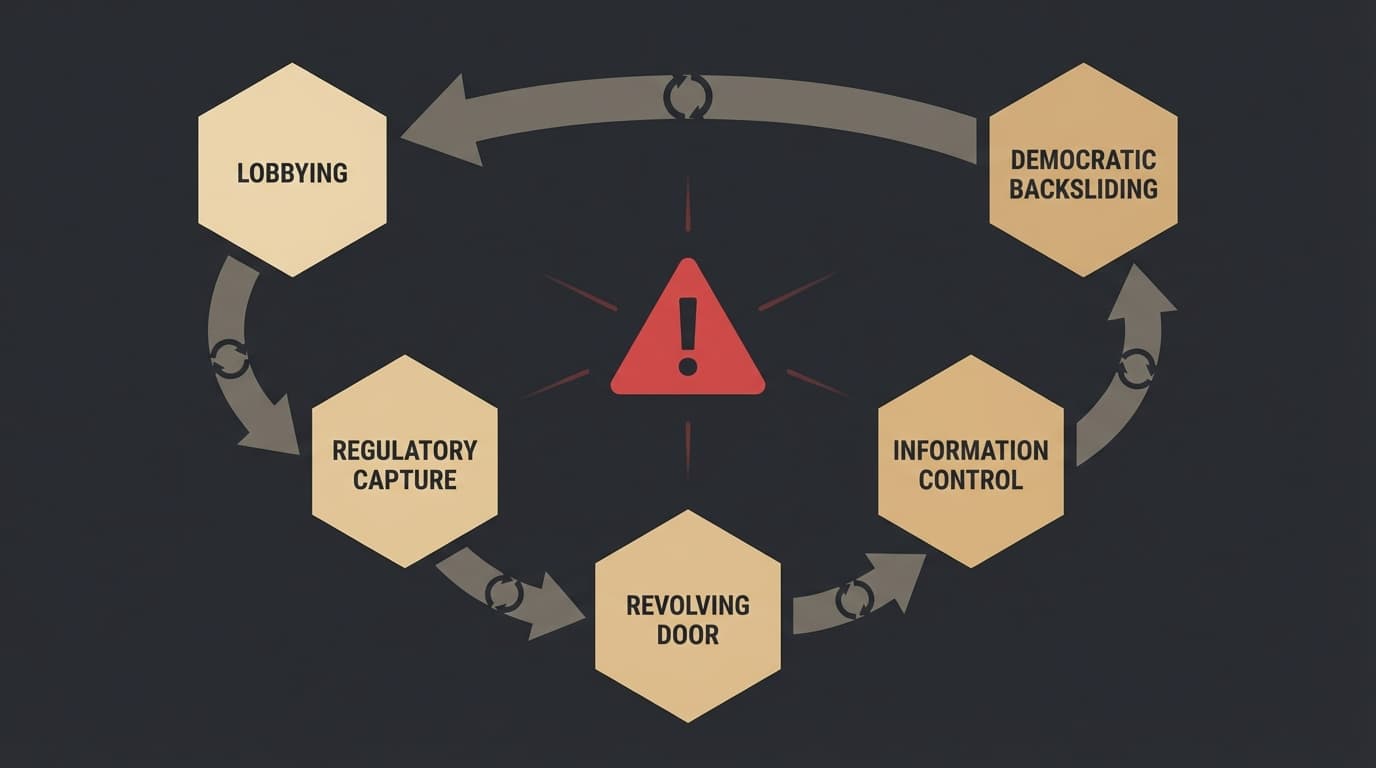
Samo-wzmacniający cykl: każdy etap przejęcia finansuje i umożliwia następny. Żaden pojedynczy punkt interwencji go nie przerywa; strukturalne oddzielenie musi działać we wszystkich pięciu węzłach jednocześnie.
AI: Luka zarządzania
Sztuczna inteligencja to nie tylko kolejny sektor technologiczny do regulowania. Jest to pierwsza technologia, która może podejmować decyzje zarządzania (alokować zasoby, filtrować informacje, oceniać ryzyko, ustalać priorytety) z prędkością i w skali, której żadna ludzka instytucja nie może audytować w czasie rzeczywistym. Na rok 2025 uczciwa odpowiedź na pytanie, kto rządzi AI, brzmi: nikt z demokratyczną legitymizacją. Rozwój modeli graniczych jest skoncentrowany w czterech lub pięciu prywatnych firmach działających pod minimalnym zewnętrznym nadzorem. Państwa narodowe konkurują zamiast współpracować, ponieważ przewaga pierwszego gracza w zdolnościach AI bezpośrednio przekłada się na przewagę ekonomiczną i militarną. Nie istnieje żaden międzynarodowy układ regulacji, który łączyłby władzę techniczną z prędkością reagowania wystarczającą do rządzenia tym, co AI już dziś robi, nie mówiąc o tym, co będzie robiła za pięć lat.
Ustawa UE o AI (2024) jest jak dotąd najpoważniejszą próbą legislacyjną. Dotyczy rynku UE. Nie dotyczy modeli trenujących w Kalifornii, autonomicznych systemów broni, algorytmów poruszających rynkami przetwarzających biliony w codziennych transakcjach ani infrastruktury oceniania społecznego działającej już w kilku krajach. Jurysdykcyjne zarządzanie nie może ogarnąć technologii bez jurysdykcji.
Problem drugiego rzędu jest mniej omawiany, ale bardziej strukturalnie konsekwentny. Systemy AI nie są tylko przedmiotem zarządzania. Są już aktorami zarządzania. W Stanach Zjednoczonych algorytmiczne oceny ryzyka określają rekomendacje warunkowego zwolnienia w większości stanów, dotykając setek tysięcy ludzi rocznie. Zautomatyzowane filtry rekrutacyjne przeglądają aplikacje, zanim jakikolwiek człowiek je zobaczy. Systemy moderacji treści podejmują dziesiątki milionów decyzji dotyczących wolności słowa dziennie. Algorytmy scoringu kredytowego określają dostęp do mieszkań. Systemy klasyfikacji ryzyka migracyjnego określają, kto przekracza granice. Algorytmiczne ceny ubezpieczeń określają, kogo stać na zamieszkanie gdzie. Każda z nich jest decyzją zarządzania: alokuje szanse, ogranicza zachowanie i dystrybuuje konsekwencje; podjętą przez system operujący z prędkością maszyn, bez okna deliberacji, bez publicznego rejestru i bez mechanizmu umożliwiającego osobie dotkniętej kwestionowanie logiki. Architektura zarządzania zaprojektowana dla decyzji w ludzkim tempie jest strukturalnie niezdolna do zapewnienia rozliczalności dla zarządzania w tempie maszynowym. To nie jest luka, którą lepsze regulacje wypełnią na marginesie. Wymaga zmian na poziomie architektonicznym: a trajektoria tego, co nadchodzi, jest bezpośrednio omawiana w The Coming Wave.
Jedna diagnoza strukturalna
Te sześć kryzysów to nie izolowane porażki. Są objawami tego samego podstawowego stanu: struktur zarządzania zbudowanych dla ery przemysłowej, powolnych, narodowych i wyłącznie ludzkich, proszone o zarządzanie problemami, które są szybkie, transnarodowe i coraz bardziej nie-ludzkie. Wartości leżące u podstaw demokratycznego zarządzania nie są błędne. Architektura, która miała je implementować, jest.
Wspólna korzenia to niedopasowanie prędkości. Kapitał, informacje i teraz sama decyzja prześcignęły instytucje zaprojektowane do ich regulowania. Każdy z powyższych kryzysów jest innym wyrazem tej strukturalnej luki, dlatego też każdy kryzys opiera się rozwiązaniu w izolacji. Nie można naprawić zarządzania AI bez naprawienia deficytu demokratycznego. Nie można naprawić deficytu demokratycznego bez zaradzenia temu, jak władza się koncentruje. Nie można zaradzić koncentracji władzy bez przemyślenia, co liczy się jako legitymowany wpływ.
Tak wygląda zmiana na poziomie architektonicznym. Nie nowa polityka wewnątrz zepsutego systemu. Inny system, zaprojektowany dla warunków, które już istnieją.
To są problemy dzisiejszych czasów.
Ale powyższe kryzysy to te, które możemy już nazwać i zmierzyć. Za nimi kryje się druga fala (zarządzanie kosmosem, etyka AI, państwa korporacyjne, wojny o zasoby poza Ziemią), która nie jest science fiction. Jest bezpośrednią konsekwencją trajektorii, na której się obecnie znajdujemy.